Milk

External Links
(Visited 9,205 times, 1 visits today)
{ 3 comments }
I published an article about foods that contain yeast on allergy details a while ago. It has been very popular, although it was very short and incomplete.
My intention to expand on it was accelerated recently when Debra Shaffer reminded me that the the article was not nearly long enough (thanks, Debra).
It still needs work, but it is considerably better than it was, at least I hope you will find it more useful.
You can help others by adding comments to the article suggesting foods to avoid or check carefully when avoiding yeast.
{ 1 comment }
On this site, the term diet does not generally refer to a diet for loosing weight, unless I word it something like “weight loss diet”.
Diet is very important. Most people do not eat enough of the right things and far too much of the wrong things. I hope you are more aware of what you eat than average.
{ 2 comments }
“Discover Why What You Are Eating Is Finishing You Off!”
Get Ready To Discover The Web’s TOP
Yeast Free Recipes And Tips Right Now!
Yeasts are organisms in the fungi kingdom. Of the 1,500 or so species of yeasts that have been discovered so far, two are of particular interest to people with allergies: Saccharomyces cerevisiae (used in baking and brewing) and Candida albicans (responsible for candidiasis i.e. yeast infections).
Other species of yeast are involved in both food production (useful) and infection. This article is confined to discussing Saccharomyces cerevisiae and Candida albicans.
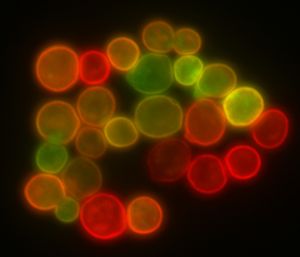 The use of yeast to produce food and alcohol is an ancient practice. It is particularly useful for producing bread and beer.
Depending on your tolerance for yeast, you may be able to have a limited quantity of some types of food that use yeast.
In bread, the growth of yeast releases carbon dioxide, which forces the bread to rise. Yeast does not survive the baking process, but many of the allergy-causing proteins do. For this reason, you may find that bread causes problems if you are allergic to yeast. It may also be one reason that some people feel fatigue after eating bread.
Some foods made primarily of yeast. See Foods That Always Contain Yeast on this website.
Yeast produces alcohol during beer brewing and wine fermentation. It also causes the fizz in beer and some sparkling wines. The yeast in beer and wine can be alive when you drink it. For this reason, beer and wine are especially bad for people with a yeast allergy. It can also cause fatigue after drinking beer or wine.
Yeast is used in the fist stage of alcohol production. Spirits such as rum, whisky and brandy. The distilling process concentrates the alcohol and leaves most of the yeast behind. Vodka and gin are especially pure and generally safe for people who must avoid yeast. Some methods of distilling are less efficient. Some types of single malt whisky for example, may have higher levels of yeast than a typical blended product. This level may or may not be within your tolerance for yeast intake.
The most common type of yeast infection is caused primarily by Candida albicans. This is not an allergy, but if you are allergic to yeast, a yeast infection may cause you to suffer both from the direct symptoms of a yeast infection as well as your yeast allergy symptoms.
“Eases multiple symptoms of
yeast infection in both Men and Women”
{ 63 comments }
I have had reason to read up on cardiovascular disease lately. Not in connection with my own health, you will be glad to hear. The book I am reading, Reverse Heart Disease Now, is focused, yet it is easy to see that much of what they are talking about goes far beyond the health of the heart. What is healthy for the heart is healthy for the whole body, and may have implications for allergies, although the book does not discuss allergies. The book does stress that cardiovascular disease is an inflammatory disease – the inappropriate inflammation of the arteries.
What strikes me as I read the book, that much of the advice promotes general health, not just the health of the heart. Too often, specialists recommend treatment that may cover the primary symptoms, but ignores the health of the rest of the body – and in some cases may cause other health problems. This book is much more holistic, and I feel that some of what I am learning in this book also applies to allergies.
{ 0 comments }
Food allergies are a growing problem world-wide. There is no doubt that more people have food allergies. Also, people are more aware of allergies.
If have a kid allergy problem in your household, your child will likely outgrow the allergy. In the mean time, be very careful about what your child eats. A food allergy bracelet is probably a good idea for younger children that are unlikely to inform adults about their allergy.
It is possible to develop food allergies as an adult. About 2% of adults in the US have a food allergies.
There is no know cure for food allergies. If you have a reaction, you can relieve allergy symptoms.
OTC antihistamines can help to provide allergy relief.
A severe reaction may require prescribed allergy medicines.
If you believe you have food allergies, you can use a food intolerance kit to test for allergies.
Other ways to test for allergies include a food intolerance blood test and a an allergy scratch (allergy scratch test).
Immunotherapy has proven to be quite successful in treating allergies. This allergy treatment gradually increases the dose of allergen in a very controlled way, usually by injecting the allergen into the patient’s skin.
A food allergy bracelet is probably unnecessary for adults, but is probably a good idea for children who may not properly explain their condition to adults.
Food allergy cause is not well understood. Avoiding excessive chemical load by eating organic food may help. Rotating your diet so as not to rely on just a few foods is also likely a good strategy.
Yes, canine allergies do exist. Like any animal, a dog can become allergic to food. Try changing brands of dog food, or use a higher-quality form of food. Dogs normally eat meat, so avoid dog food that uses cheap vegetable filler.
{ 0 comments }
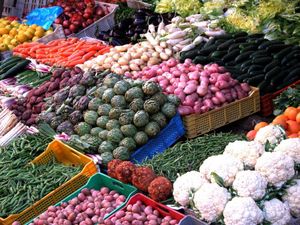
Food supplies fuel to our bodies. Of course we can’t live without it, although for those with allergies, we can not live with some of it. It is well worth the effort to be careful in choosing what you eat, for the sake of your allergies and your health.
If you have food allergies, be very careful to check the ingredients in all food before you eat it. Do not be shy about this!
In terms of general health, try to eat healthy food as much as you possibly can, and avoid unhealthy food.
{ 0 comments }
At one time, allergy meant any form of hypersensitivity to substances such as foods, dust, mould, pollen, chemicals etc. By the 1960’s, it became clear that different types of reactions exist, and the term “allergy” came to mean “type I hypersensitivity”. The term allergy is becoming more blurred lately, as many people refer to any type of food, particle or chemical intolerance as being an allergy.
This website, purists may be horrified to discover, uses a more blurred definition of allergy. This is for the sake of convenience, since “type I, II, III, IV or V hypersensitivity” (or even the term hypersensitivity on it’s own) is cumbersome.
The point of this website is that certain substances (for example, a food) cause some people to become ill (celiac for example), or cause any number of undesirable effects, or symptoms (food allergy).
The purpose of this website is to help you discover your allergies, and then deal with them. “Dealing with allergies” ranges from avoiding the allergen (especially in the case of food) to using allergy control products.
{ 36 comments }
Are you wondering just exactly what certain words mean, especially as used on this website? For example, just exactly what does “allergy” mean anyhow?
Sometimes, the same word can mean different things to different people.
This section contains a list of words commonly used on Allergy Details. You can explore some subjects more deeply, and you can also find out what we mean when we use certain words. There are also external links so that you can learn even more.
For example, we discuss food and food allergies, and we do have a recipe section. Some of the food ingredients may be unfamiliar to you, or you might want to find out more about it. You won’t necessarily get a detailed description of the food ingredient (in some cases you might), but you will certainly get links to external sites with more information about each word/subject.
{ 0 comments }