 This recipe was contributed by Frances Cheung.
The recipe can be made dairy-free by substituting the butter for olive oil.
- Preparation Time: 3 minutes
- Cook Time: 5 minutes
- Yield: 4 servings
(Visited 3,304 times, 1 visits today)
{ 0 comments }
This recipe was contributed by Frances Cheung.
The recipe can be made dairy-free by substituting the butter for olive oil.
{ 0 comments }
There are many paths to discovering and managing your allergies. There is certainly a lot you can do on your own, including following some of the advice on this websites, and many other helpful websites.
Professional help is also highly advisable, and absolutely necessary if you have life-threatening allergies.
I have started a new section on this website: the Allergy Professional Help Directory.
For now I have just two entries, both for Ottawa, Ontario (Canada).
I encourage anyone with suggestions to contribute to this directory! Please make your suggestions in the comment section of either this article, or (better yet) the help directory section.
{ 0 comments }
So you have allergies, or suspect you might. Where do you turn to for help?
If you are lucky, your family doctor may be able to refer you to an allergist who can go beyond scratch testing and antihistamines. These approaches have their place, but there is a lot more to managing allergies that the few tools that main-stream medical though is willing to embrace.
This section relies on user support to make it grow. Do you know a great allergist in your city? Do you know an allergist so fantastic that you are willing to drive two hours for a visit?
Please share your experiences here. Leave a comment, with the name, location and contact information of your allergist. Please indicate what type of practice they run.
There are a variety of approaches to dealing with allergies, and different health professionals have different types of training. Please indicate the type of training or certifications your suggested health professional has obtained.
{ 0 comments }
 New rules proposed by the USDA (US Department of Agriculture) will allow US-certified organic food to be adulterated with a list of 38 non-organic additives and other ingredients, including colours, starches and oils.
How organic is that?
{ 2 comments }
Of the many types and strains of yeast, Candida albicans (responsible for candidiasis i.e. yeast infections) and Saccharomyces cerevisiae (responsible for bread, beer and other fermented foods) are most significant to your health.
Fermentation is a very common – and ancient – method of processing food. bread and beer are the most well know examples in the western world.
Many people find that they become tired after drinking beer or wine. You may laugh, but I’m not talking about dozens of drinks. Just a single drink makes some people sleepy, yet they can drink spirits such as gin or vodka.
Becoming tired after eating bread is another common complaint. There are several possible causes, one of which is a yeast allergy.
The most common strain of yeast used in baking and brewing is Saccharomyces cerevisiae, although other strains are also used. Originally, this type of yeast may have been derived from grape skins, on which yeast naturally grows.
The term fermentation does not always involve yeast.
Another form of fermentation is lactic acid fermentation. For example, yogurt involves bacteria not yeast.
Fermenting tea is not microbial at all in most cases – it simply means that the tea has been oxidized.
Candidiasis is the medical term for a yeast infection. It can occur in any area of the body, especially exposed and moist parts of the body.
Common types, include:
Treatment is typically with antimycotics (antifungal drugs).
{ 15 comments }

Do you get quite tired after having just one beer or glass of wine? Have you also noticed that you don’t get tired after spirits such as vodka or gin?
This could indicate a yeast allergy.
If the problem is only after drinking some types of beer, consider a wheat allergy as some types of beer are made with wheat.
{ 18 comments }
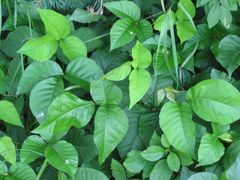 Poison ivy allergy is the cause of the rash you get when exposed to this plant.
Mangoes allergies are closely related: read on.
Poison ivy protects itself in a very sneaky way. It produces urushiol, which irritates the skin, causing an allergic reaction. This is another example of a contact allergy.
The symptoms are typically blistering, unbearably itchy skin.
About 15% to 30% of the population (according to a Wikipedia article) are not allergic to Urushiol, sparing them the effects of poison ivy. It is possible for these people to develop an allergy after repeated exposure, so if you are immune to poison ivy, don’t take it for granted!
Urushiol does not need the plant to have an effect. The chemical can remain active for up to five years, and can transfer from other objects, such as boots or pant-legs.
Eating mangos can make the reaction worse, so avoid mangos if you are experiencing a poison ivy rash.
Poison ivy should never be burned as the allergen spreads in the smoke, could be inhaled, and cause serious lung problems.
Poison ivy is not the only plant to produce Urushiol. We even eat some of the plants:
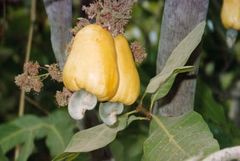
Mango allergy reactions are caused by Urushiol in the sap. Most people do not seem to be bothered by the about of Urushiol in mango skin, but some people become sensitized and develop allergic reactions to mango.
If you suspect that you may be sensitive to Urushiol (for example, if you have had a bad reaction to poison ivy), I suggest you wash your mangos with soap and water before handling them, to reduce your chances of contacting Urushiol.
If you have a strong reaction to Urushiol, you are best to completely avoid mangos.
{ 110 comments }

While an allergy to wool is possible, it is considered to be rare.
If you think you have an allergy to wool, first ask yourself “do I have sensitive skin?” If so, you may find yourself itching when you wear any fabric with course fibres.
Before giving up on wool completely, try wearing clothing made of a softer fibre, for example cotton, under the wool garment.
You may also notice a difference between a course-wool sweater, and a fine wool pair of pants. If the latter is OK but not the former, you probably don’t have a wool allergy.
{ 7 comments }
Contact Allergy
It is possible to develop an allergy to skin contact with certain materials. A few common contact allergens include:
{ 2 comments }