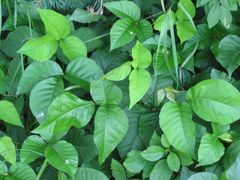
Poison Ivy Allergy

by Allergy Guy

allergy-poison-ivyPoison ivy allergy is the cause of the rash you get when exposed to this plant.

Mangoes allergies are closely related: read on.

Poison ivy protects itself in a very sneaky way. It produces urushiol, which irritates the skin, causing an allergic reaction. This is another example of a contact allergy.

The symptoms are typically blistering, unbearably itchy skin.

About 15% to 30% of the population (according to a Wikipedia article) are not allergic to Urushiol, sparing them the effects of poison ivy. It is possible for these people to develop an allergy after repeated exposure, so if you are immune to poison ivy, don’t take it for granted!

Urushiol does not need the plant to have an effect. The chemical can remain active for up to five years, and can transfer from other objects, such as boots or pant-legs.

Eating mangos can make the reaction worse, so avoid mangos if you are experiencing a poison ivy rash.

Poison ivy should never be burned as the allergen spreads in the smoke, could be inhaled, and cause serious lung problems.


Other Plants that Produce Urushiol

Poison ivy is not the only plant to produce Urushiol. We even eat some of the plants:
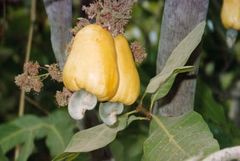
Mango Allergy

Mango allergy reactions are caused by Urushiol in the sap. Most people do not seem to be bothered by the about of Urushiol in mango skin, but some people become sensitized and develop allergic reactions to mango.

If you suspect that you may be sensitive to Urushiol (for example, if you have had a bad reaction to poison ivy), I suggest you wash your mangos with soap and water before handling them, to reduce your chances of contacting Urushiol.

If you have a strong reaction to Urushiol, you are best to completely avoid mangos.

Related posts:

  1. Mango Allergy
  2. Latex Allergy
  3. Contact Allergy
  4. Cockroach Allergy
  5. Allergy Cure: Potential To Reduce Severe Allergic Reactions

{ 96 comments… read them below or add one }

1 Poison Ivy Hater May 31, 2011 at 08:30

I am getting really sick of going back to the clinic multiple times every year for prednisone. I am extremely allergic to poison ivy… it is getting to the point where I can’t even cut my lawn without having an allergic reaction. There is a bunch of it growing up my back fence and now just pushing the lawnmower by it a few times does the trick. I guess no more wearing shorts in the back yard :/
I don’t think the doc @ the clinic will prescribe the prednisone steroids again so looks like I will be getting some calomine lotion instead.
I’m going to war against all the poison ivy along my back fence. Sick of this crap. Even if I have to pour old gas on it to get rid of it, I don’t care. I’ll do whatever it takes.

Reply

2 Allergy Guy May 31, 2011 at 11:39

I’ve seen success with painting roundup directly on the leaves of poison ivy.

I hate chemicals so I prefer to avoid herbicides completely, however there are occasions where they are extremely helpful and can be used carefully, without dumping huge amounts of the stuff into the environment.

The point is not to spray it on, but to apply it directly to the leaves with a paint brush. The plant will absorb it and that should permanently take care of the whole vine, not just a few leaves.

Reply

3 Jessica June 24, 2011 at 08:14

I am severely allergic to poison ivy….. What helps me when I mow is taking Dr. Brunners tea tree oil soap and lathering it up and rubbing it onto my skin BEFORE mowing or gardening. When I’m done, I take a shower and wash it off. The natural essential oils bind with any of the ivy oils and it washes off. It’s a major lifesaver…..

Reply

4 Allergy Guy June 24, 2011 at 10:04

That’s a great idea, Jessica! I bet the soap itself also leaves a protective film on your skin too, so for those who don’t have access to tea tree soap, it would be worth trying this technique as well with regular soap.

If I understand you correctly, you rub the soap on and leave it there until after you’ve done gardening, right?

Reply

5 Jessica June 24, 2011 at 11:25

Dr. Bronner’s Soap is available online. I’m not sure if it is shipped outside of the US or not. If you cannot find Dr. Bronner’s soap, you can simply add your own tea tree oil to any liquid or natural soap. I’d probably add a good 10 drops….. shake it up a bit prior to lathering with it. You may want to add a bit of water to make it easier to mix into the soap. And yes, you apply the soap prior to gardening and then wait until after you have completed your desired chore before washing it off thoroughly. You can even wash with it again after you wash it off as another precaution. If you happen to come in contact with Poison Ivy, A total system cleanse will help as it goes internal. I had it so severe that my eyes have swollen shut. Last time my husband wanted me to stay inside the house as it looked like I was severely beaten, no kidding. MSM lotion worked the best on my skin after my last attack with the miserable stuff….. There are herbs from www.energiqueherbal.com that can help detox your body. Upcom and downcom I believe they are called.

Reply

6 Malkie April 2, 2012 at 18:34

I must be one of the few who is not allergic. I have been exposed more times than I can count to posion ivy, oak and sumac and never once had a reaction. The most 1time exposer that i had was in highschool when I slept outside with 3 of my friends out in the woods on the ground. We awoke in the morning we discovered that we had slept on a huge bed of posion ivy. They were covered head to toe with a horrible oozing rash, and I didn’t have a mark on me. I was fine, but the other three girls had to go to the hospital for treatment. I stayed behind and ripped out all the ivy I could find and put it in the burn bin.

Reply

7 Allergy Guy April 2, 2012 at 19:14

You’re lucky you’re not allergic.

Poison ivy should never be burned.

Reply

Leave a Comment

Previous post:

Next post: