This breakfast is healthy for anyone and everyone. It is also healthy for the environment, since many of the ingredients are typically organic.
Mix the following ingredients according to taste. Larger amounts of quinoa and amaranth compared to the teff and flax work best:
Cook the following:
Add the following to a measuring cup. Individual quantities are not so important, as long as the total amount comes to what you consider a serving (typically between 1/3d and 1/2 cup in total).
None of the above ingredients are critical – any one of them can be left out. You may not want too much flax or teff, but this is a matter of personal taste.
Add three measures of water for each measure of grain.
Bring to a biol, then simmer until all water is absorbed. This takes about 30 to 40 minutes.
When done, add a mixture of nuts and seeds.
Crock Pot Method
This recipe can be cooked in a slow cooker. Use a timer to turn the slow cooker on about 3 hours before you want breakfast to be ready, and off about 15 to 20 minutes before serving time. You will have to adjust cooking time according to the quantity you are cooking, and the water temperature as it comes out of the tap.
(Visited 5,287 times, 1 visits today)
This section contains recipes and ideas for breakfast. All are wheat and milk free.
(Visited 12,933 times, 1 visits today)
Depending on your allergies and where you are going, it can be very hard to stay healthy while travelling.
This section is devoted to products that make it easier to eat and breath while travelling.
(Visited 2,431 times, 1 visits today)
Mike, who operates the Gluten Free Blog, has recently put together a fantastic resource – an aggregator that lists recent posts from a variety of sources about eating gluten-free. Now you can find out the latest without having to visit dozens of websites (some of which only get updated occasionally, others only occasionally have relevant information).
One of the features I love about this system is that it avoids duplicate entries. He has also spent a lot of time developing software to filter out irrelevant articles, so the aggregator has a very low noise factor.
This aggregator is relevant for people who areceliac or avoid gluten for any reason. Also highly relevant if you avoid wheat.
(Visited 1,910 times, 1 visits today)
 This is so bad, you have to laugh.
It seems that wheat interests in England are scared silly about the number of people who are discovering that wheat is making them ill. Rather than market to those who can eat wheat, they instead are attempting to say that black is white, and that wheat is not the problem at all, its “our lifestyle”.
They’ve even set up a whole website devoted to it – www.wheatintolerance.co.uk. If you want a laugh, copy and past the link above, and have an ironic laugh.
[click to continue…]
(Visited 1,508 times, 1 visits today)
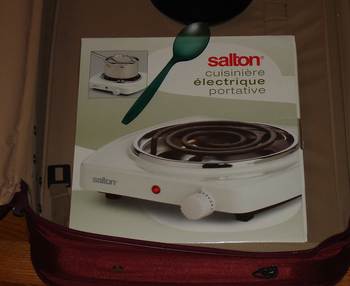 On my last trip to a hotel, I was very unimpressed with the hotel food. Add to that the rough past few weeks (still not done with), and believe me, I do not want to go through this again!
The solution: a kitchen in a suitcase. It’s a bit of a challenge. Firstly, I hate to plan ahead this way. I should be getting things together now, but I’d rather write about it. It has to go on an airplane (let’s hope they don’t loose this suitcase – I can do without my cloths, but not my food!), so I have to consider space and weight. And silly international regulations.
[click to continue…]
(Visited 2,268 times, 1 visits today)
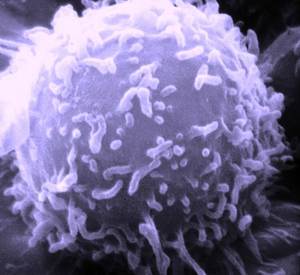 Wikipedia’s featured article today is about the immune system. This article is well worth reading because understanding the immune system is central to understanding how allergies operate at a biological level.
The article points out that even single-celled organisms like bacteria have a defence system against viruses. As life evolves and becomes more complex, the immune system too must become more complex.
Its a cat-and-mouse game between the immune system and pathogens, as bacteria, viruses and the like evolve to get past the immune system, and the immune system responds by learning how to recognize the newly disguised pathogens.
It is easy to see how such a delicately balanced system can become disrupted.
Even if you don’t understand everything in the article, it is well worth a read. There are some really great scanning electron microscope images of cells, if you like that sort of thing (I do).
(Visited 30,326 times, 1 visits today)
I am starting a new section on this website to help travelers work out what countries they can easily travel to, and which require more research, based on the foods they are allergic to.
The briefs state the staple food (you’ll have a tough time if you are allergic to this one) as well as commonly used ingredients (if you are allergic to these, you must be vigilant!). Also covered are easily avoided foods (if you are allergic to these, then this is the country for you!).
The first allergy food brief is for Thailand.
Your feedback for each country, and for the whole project in general will be greatly appreciated. If you see any errors, please help other readers and leave a comment!
(Visited 1,020 times, 1 visits today)
Here is a forum thread about travelling that talks about world travel with a gluten intolerance.
(Visited 895 times, 1 visits today)
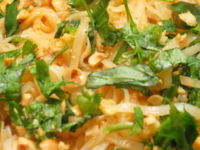 Staple Carbohydrate: Rice
Other Staple Ingredients: meat, sea food, vegetables.
Common Ingredients: chili, coconut milk, garlic, limes, peanuts, fish sauce, shrimp paste
[click to continue…]
(Visited 19,597 times, 1 visits today)