Allergy — Gluten Allergy / Gluten Free Diet / Yeast Allergy / Asthma / + other Allergies — Page 61

Candida Books

by Allergy Guy

These books are about yeast, Yeast
Infections
and Candida.

Table of Contents

The
Yeast Connection: A Medical Breakthrough


Description
An in-depth guide to those health problems in people of all ages and sexes
that can be traced to sensitivity to the yeast germ candida albicans.


From the Inside Flap
An in-depth guide to those health problems in people of all ages and sexes
that can be traced to sensitivity to the yeast germ candida albicans.


Order
from Amazon.com


[click to continue…]

(Visited 7,915 times, 1 visits today)

{ 2 comments }

Health

by Allergy Guy

Health


A state of good health. In general, this means having lots of energy, sleeping well, having mental clarity, and no health complaints, for example with stomach, joint pain etc.

There are many things that affect health, including eating healthy food and avoiding unhealthy food, getting plenty of sleep, avoiding chemical contaminants … the list goes on.

This website deals primarily with allergies and how that relates to health. The main reason for dealing with allergies is to feel better, so while we are at it, dealing with food sensitivities and indoor air quality are also covered.

Any time a particular allergen is of concern to the allergic and non-allergic alike (mold for example), mention of the wider health concerns is usually noted.


External Links


(Visited 8,284 times, 1 visits today)

{ 2 comments }

Nutrients

by Allergy Guy

Nutrients


Nutrients are the whole reason we eat food in the first place – for the energy and essential elements and compounds the human body requires to stay healthy.


External Links


(Visited 4,748 times, 1 visits today)

{ 0 comments }

Wheat

by Allergy Guy

Wheat

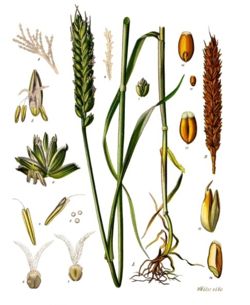
Wheat

Note

This description is a work in progress. Note in particular that the lists may not be complete, for example synonyms to wheat. I certainly intend to improve and expand on this article as time goes on. Do please add your comments to help add content or correct any inaccuracies that you notice.

Wheat Has a Use

As anyone who must eliminate wheat from their diet knows all too well, wheat is a very useful basic ingredient. It makes wonderful bread, mostly because it has such a high gluten content, which holds everything together and provides such great consistency.

Wheat has been part of the human diet for at least 10,000 years, and probably longer. It grows well in temperate climates. It is nutritious, easy to process and store, and is extremely versatile to cook with. For these reasons, it is a staple food in many parts of the world, particularly temperate climates.

The Problem with Wheat

The problem with wheat is that it has become a highly refined food – both in terms of genetics (breeding for high-yield, drought- and pest-resistance etc.), and in terms of how it is processed (white flour). The term enriched white flour is a sure sign that too much has been taken out of the original food, so that nutrients must be artificially added back into the food. Highly refined flour can be classified as unhealthy food for several reasons. Firstly, it is missing key nutrients that were originally found in the whole food.

The problem with relying on any staple as the primary food in your diet is that it can lead to developing allergies to that food. Wheat is no exception. It is one of the most common food allergens. While not a problem for everyone, a significant number of people are allergic to wheat. Probably a large proportion of these people are unaware of their allergy. They may be aware that they are under-performing, but there are also many under-performers who do not realize they may have a food allergy.

There are other problems with wheat, although some of these are caused by eating too many carbohydrates in general. See the internal links section of this article for more information.

If you are not allergic to wheat, or celiac, stick to eating whole grain wheat if you want your wheat intake to be healthy. You can make fresh flour using the whole grain for baking etc., although this is time-consuming, and you will need to buy a fairly expensive flour mill.

Types of Wheat

There are many types and varieties of wheat. Sometimes, the list of ingredients will list the type of wheat rather than just saying wheat, so it is well worth your while to memorize this list:

  • Durum
  • Einkorn
  • Emmer
  • Kamut
  • Semolina
  • Spelt
  • Triticale (a wheat/rye cross)

Some of these types of wheat, for example spelt, are often found in foods that are “wheat-free”. Some people can tolerate spelt, while others can not. I find I can tolerate a little at a time, for example one or two spelt cookies, every week or two.

Synonyms to Wheat

When scanning a list of ingredients, watch out for these – they are basically made of wheat, or are wheat by a different name:

  • Flour
  • All purpose flour
  • Bulgur
  • Durum flour
  • Farina
  • Graham
    • Graham flour,
    • Graham crackers
    • Graham crumbs
  • Bread crumbs
  • Wheat germ

Wheat Relatives

Wheat is a grass. Besides being related to your lawn and bamboo, grass is also related to the following food crops because they too are grasses:


External Links


(Visited 33,504 times, 1 visits today)

{ 5 comments }

Avoiding wheat in the Western world like navigating a mine field. If you are allergic to wheat or gluten, or have celiac, you need a really good map and you need to always double-and triple-check everything.

This article tells you what to avoid.  For ideas on what to eat instead, see Gluten Free Foods

[click to continue…]

(Visited 104,549 times, 1 visits today)

{ 65 comments }

Spelt

by Allergy Guy

Spelt

Coming-Soon


External Links


(Visited 6,068 times, 1 visits today)

{ 0 comments }

Rye

by Allergy Guy

Rye

Coming-Soon


External Links


(Visited 10,574 times, 1 visits today)

{ 0 comments }

Barley

by Allergy Guy


Barley


barley

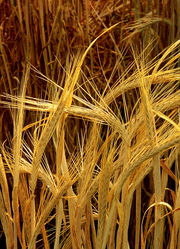
Of the main cereal crops (wheat, barley,oats and rye), barley is probably the least commonly used in day-to-day food. It is often used to make beer and whisky.

As a food, barley is most often used in soups and stews. In Asia, is boiled to make barley water, a popular drink which is ideal for hot weather.

Barley can grow in cold conditions, which is why it is a staple crop in Tibet (they also grow wheat there, so if you are allergic to wheat, Tibet is not actually a perfect destination for you).

Barley is a flavorful, tasty, chewy grain. It can be cooked like rice and served on the side with meat and vegetable dishes, much like rice.

[click to continue…]

(Visited 30,540 times, 1 visits today)

{ 11 comments }

Corn

by Allergy Guy

Corn

Coming-Soon

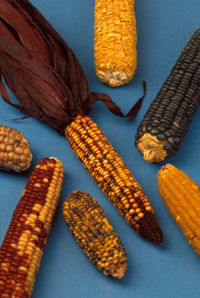
Corn


External Links


(Visited 9,981 times, 1 visits today)

{ 1 comment }

Peanuts

by Allergy Guy

Peanuts

Coming-Soon


External Links


(Visited 4,884 times, 1 visits today)

{ 2 comments }