Allergy — Gluten Allergy / Gluten Free Diet / Yeast Allergy / Asthma / + other Allergies — Page 34

Soy Allergy

by Allergy Guy

Soy Allergy

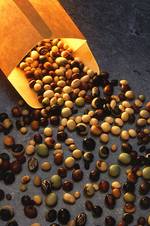
Soy allergy is very common.  Soy isn’t a great food anyhow, so even if you’re not allergic to it, you are best to avoid soy.

Soy is used in a wide variety of products, so always take a close look at the ingredients.

If you currently use soy as a mainstay in your diet, replace it with other high-protein foods.  Meat, fish and eggs are good sources of protein.  For vegetarians, peas, beans (other than soy beans) and lentils are great choices.

Foods that contain soy include:

  • Soy sauce (most contain gluten, not suitable for gluten free diet
  • Soy oil
  • Infant Formula
  • Meat substitutes
  • Dairy substitutes
  • Soy milk
  • Tofu
  • Textured vegetable protein (TVP)
  • Chinese fermented black beans
  • Soy Milk
  • Margarine
  • Soy Ice Cream
  • Soy Yogurt
  • Soy Cheese
  • Veggie burgers
  • Tempeh

Non-food products that may contain soy:

  • Soap
  • Cosmetics
  • Resins
  • Plastics
  • Inks
  • Crayons
  • Solvents
  • Clothing.
(Visited 2,891 times, 1 visits today)

{ 2 comments }

Rice

by Allergy Guy

Rice

Rice | Gluten Free Diet | Rice Allergy

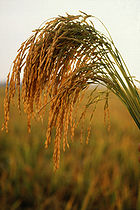
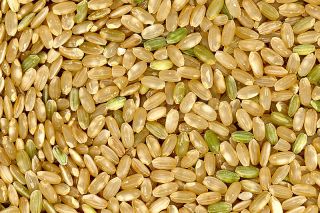
Rice is a member of the grass family, and is therefore a grain.

Rice is an ideal food for most people with a gluten allergy or are on a gluten free diet

It is one of the world’s most important staple foods, providing approximately one fifth the total calories consumed world wide. It is the second most highly cultivated grain after maize, but not all maize is directly consumed as food by humans, rice is the top the calorie provider in the world.

[click to continue…]

(Visited 12,138 times, 1 visits today)

{ 1 comment }

Gluten Free List

by Allergy Guy

Gluten Free List | Gluten Free Diet | Gluten Allergy

This gluten free list will help you with your gluten free diet.  Following this diet can seem challenging at first.  The list you first see is everything you can’t eat.

Yes, it is important to know what foods contain gluten, otherwise you will poison yourself.  The problem is that most people focus on everything they can’t eat at first, leading to depression.  In many cases, eating gluten also leads to depression.

What to do?

The answer is actually quite simple, and easier than it ever was before: focus on what you can eat.  It’s that simple.

Here are a few ideas to get you started:

Fresh Vegetables.  You can’t go wrong with this one!  They are healthy for everyone and always gluten-free.

Fresh Meat.  Fresh meat is always gluten-free, unless of course, you contaminate it yourself when you bring it home and prepare it.  But of course you’re not going to do that, so this is a safe choice.  If  you are vegetarian, read on, I’ve got some ideas for you too.

Fresh Fish.  Like fresh meat, fresh fish is safe and a fantastic source of protein.  It is also a source of extremely healthy oils.

Legumes. Legumes offer a wide variety of gluten-free vegetarian protein.  Legumes include peas, beans and lentils.  Peanuts (which are not nuts) are an example of a legume.

Gluten-free Cereals. While certain cereals are your worst enemy, there are still lots of other gluten-free cereals to choose from.  This includes maize, rice, teff and a number of others.  Just avoid the big four (wheat, rye, barley and oats and the rest are fine.

Pseudocereals. Pseudocereals are very similar to cereals in appearance and function, but are not in the grass family.  Examples include amaranth and quinoa.

This is not a complete list, but it is plenty to get you started.

Add your own favorites in the comment box below.


Internal Links

(Visited 4,261 times, 1 visits today)

{ 0 comments }

Pseudocereal

by Allergy Guy

Pseudocereals Ideal for a Gluten Free Diet

Pseudocereal | Gluten Free Diet

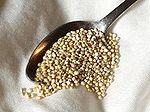
Pseudocereals, or pseudograins, are ideal for the gluten free diet. Pseudograins look like grain, and in many ways you can cook with them as you would with grains.

The difference is that they are not members of the grass family. They are also completely gluten-free. This makes them an excellent choice if you have a gluten allergy or are celiac.

Pseudocereals are broad-leaved plants that often grow in environments where grains do not. For example, quinoa grows well at high altitudes, and is a staple in the Andes in South America.

Pseudograins are generally less subject to the extreme breading found in other grains, at least they have been up until now. With luck they will not undergo the extreme genetic manipulation grains have been subjected too, and which may partially explain why so many people are allergic to certain grains.

Some types of gluten free beer are made from the pseudocereal buckwheat. Despite the name, this plant is completely unrelated to wheat.

Here is a list of pseudograins to look out for at your local grocery or health food store:

  • Amaranth
  • Breadnut
  • Buckwheat
  • Cattail
  • Chia
  • Cockscomb
  • Kañiwa
  • Pitseed Goosefoot
  • Quinoa
  • Wattleseed (also called acacia seed)

Internal Links


(Visited 3,548 times, 1 visits today)

{ 0 comments }

Gluten Free Diet

The gluten free diet is becoming ever more popular, and with good reason.  As more and more people discover they have a gluten allergy or are celiac, the idea of completely eliminating gluten from the diet is gaining ground.

Should everyone go gluten-free?  This is debatable. 

Certainly, anyone with celiac must avoid all gluten, in all forms, at all times.

To a lesser extent, the same goes for those with a gluten allergy.  You may be able to tolerate some gluten, or none at all, depending on your body.

It seems that there are many who do better without gluten, even if they don’t have a gluten allergy and aren’t celiac.

The book Eat Right 4 Your Type suggests that all people with type-O blood should avoid gluten as well.  To a large extent, this depends on how you feel.  If you are an O blood type and you find your energy sagging, trying a gluten-free diet is well worth checking out.

When it comes to following a gluten-free diet, here are some top articles on this site to look into:

Gluten-free diet

This article explains what a gluten free diet is, and why people follow it.  It also points out some of the pitfalls of the gluten-free diet.

Read more about the gluten free diet >>

Gluten allergy

Having a gluten allergy is a big reason for avoiding gluten!  Many people need to learn more about this condition, and they read this article to help them understand this condition.

Read more about gluten allergy >>

Gluten allergy symptoms

Think you might be allergic to gluten, but you’re not sure?  This article tells you more about what to watch out for.

Read more about the Gluten allergy symptoms >>

Gluten and Cross-Reactivity

If you can’t eat gluten, there is a good chance there are other foods you can’t eat, especially the ones listed in this article.

Read more about the Gluten and Cross-Reactivity >>

Gluten free beer

You may feel the need to drown your sorrows, but watch what you drink!  Most beer has gluten in it, because almost all beer is made with wheat or $barely$.  Find out how you can drink beer without poisoning your self with gluten!

Read more about gluten free beer >>

Photo credit

What are your favorite articles about gluten on this site, or on other websites?  Leave a gluten-related comment!

(Visited 2,965 times, 1 visits today)
{ 0 comments }

Allergen

by Allergy Guy

Allergen | Define Allergen | Allergen Definition

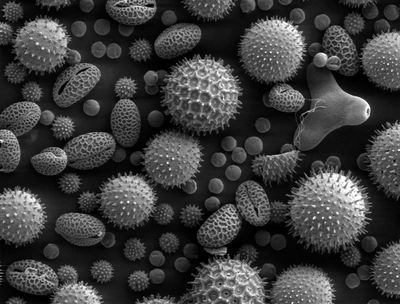
An allergen is a substance that triggers an allergic reaction in people who are sensitive to that substance.

For example, if you are allergic to gluten, then for you, gluten is an allergen.  Gluten is not an allergen of other people who are not sensitive to this food.

Each person may have their own unique set of allergens, and unique symptoms for each allergy.  It is often very difficult to realize if someone has allergies or not.  Because symptoms vary, it is impossible to know what allergen is the problem based on the reaction.

Common allergens include:

… to name just a few.


Internal Links

(Visited 5,109 times, 1 visits today)

{ 4 comments }

Keratosis Pilaris

by Allergy Guy

Keratosis Pilaris | Allergy Symptom

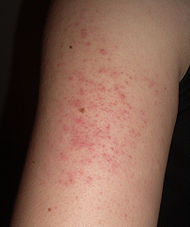
Keratosis pilaris is a skin condition, where the skin on the back and outer sides of the upper arms are rough and bumpy.  It can also appear almost anywhere else on the body, especially on the thighs and tops of legs.  It does not generally occur on palms or soles of feet.

It can be related to an allergy, including a gluten allergy.

Keratosis pilaris is also called chicken skin because it resembles goose bumps.  Many people are unaware they have this condition, confusing it with acne, especially when it appears on the face.

There are several types of keratosis pilaris:

[click to continue…]

(Visited 79,676 times, 1 visits today)

{ 28 comments }

Cockroach Allergy

by Allergy Guy

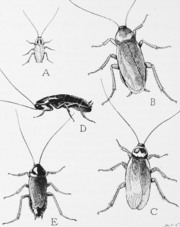
Cockroach AllergyCockroach allergy problems can play a significant role in people with asthma.
People with a sensitivity to cockroaches often develop a rash if one of these insects crawls over their skin.

Direct contact with these insects is not generally the main problem.

Cockroach infestations cause a high level of feces and body parts from dead insects, as well as saliva.  Long term exposure can eventually cause some people to become sensitive to cockroach contamination, causing an allergy.

[click to continue…]

(Visited 3,416 times, 1 visits today)

{ 0 comments }

Gluten Free Diet and Rice

by Allergy Guy

gluten free diet riceFollowing a gluten free diet can seem difficult at first.  How do you replace wheat?  Rice is probably one of the best answers.

Why rice?  Because it is a staple food throughout a large geographical area, and it is the mainstay for many cultures.

There is no shortage of ideas on how to create fantastic and varied gluten-free meal ideas with rice!

[click to continue…]

(Visited 2,346 times, 1 visits today)

{ 0 comments }

Self testing for a food intolerance has pros and cons over traditional allergy tests.  Both methods have their place of course.  No matter how much you respect your doctor’s opinion, allergy and food intolerance testing does have an important role to play.

Self Testing Pros and Cons

There are several advantages to self-testing for food intolerances.  Be sure to understand the disadvantages though to get a full picture of where self-testing fits it.

One advantage of self-testing is that it is cheaper than traditional tests.  This is a very important consideration if you simply can’t afford mainstream medical testing.  It’s considerably better than nothing.  On the other hand, it can lead you astray in some circumstances, depending on the nature of your intolerance.

Another advantage is that self testing can be more accurate than traditional allergy tests. 

If your allergy symptoms are discomfort, but not life threatening, then it really all comes down to how you feel.  False positives mean avoiding foods that suit you fine.  The avoidance needlessly restricts your diet.

For example, if you are tested for gluten allergy and get a false positive, you will have to go on an arduous gluten free diet, which is a major pain.  You’ll even have to watch what you drink, sticking to gluten free beer for example.

A huge proportion of the population should avoid wheat (for example, those with type-O blood), but this is not the same as completely avoiding even small amounts of a food at all times.

There is a down side to self-testing for food intolerances however.

If you really do have an intolerance to gluten for example (meaning you are celiac), you may not notice a particularly big difference between when you consume gluten and when you do not.  However celiac does have severe health implications for gut, and all other internal organs. 

A proper test for celiac will reveal this, alerting you to the importance of avoiding gluten at all times, even in small amounts.

Traditional testing can also be a very helpful guide, giving you a short-list of foods to avoid as you self-test for food intolerances.  After all, you can’t avoid everything!


Internal Links

External Links

(Visited 4,762 times, 1 visits today)

{ 2 comments }