Allergy — Gluten Allergy / Gluten Free Diet / Yeast Allergy / Asthma / + other Allergies — Page 46

Meat Allergies

by Guest Writer

By Karen Blue
Meat Allergies in general, are fairly uncommon. However reactions can range from anaphylactic to digestive issues.

Avoiding certain meats may be more complicated if you are extremely sensitive, for instance, even certified vegan products can be made on the same line as meat and milk products. People who avoid meat, for religious reasons, often have certification measures that are more restrictive.

For Jews not eating pork is the most observed kosher practice. Muslims consider eating products derived from pork violation of their dietary laws as well. Muslims mark products that comply with their dietary laws as Halaal meaning “lawful” or “permissible”. The foods that meet Jewish dietary laws have Kosher labeling. Both are “pork free” with almost no cross contamination issues with pork.
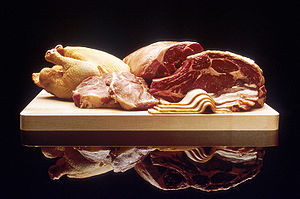
allergy to meat

Jewish people who observe dietary laws do not mix milk and meat. If you are also allergic to milk, be aware that in Jewish law, a food product may be considered pareve, if it contains a very small amount of milk. Food marked parve could potentially have enough milk protein in it to cause a reaction in a milk-allergic person.

Most halaal gelatin is made from beef not pork so it can not be considered vegetarian.
Hidden Pork usually in the form of gelatin includes marshmallows, candies, ice cream, jello, vaccines. There are vegan and Halaal variations of marshmallows, jello and other foods. Making Vegan marshmallow or gelatin is difficult to make, and also hard to find.

Karen Blue runs the avoiding milk protein website.
(Visited 93,579 times, 1 visits today)

{ 214 comments }

Milk – Hidden Sources

by Guest Writer

By Karen Blue
Everything from egg substitute to artificial sweeteners can contain milk. Some artificial sweeteners are made with milk components that may or may not cause a reaction, as the amount of milk protein is so small.

Even at the dentist Prospec MI brand of fluoride has the milk protein in it. The dentist should also look out for prescription strength Recaladent in it. With any medical problem let your dentist know and have the allergies noted on your chart. Dairy protein may be in chewing gum, sometimes under the name recaldent, look out for packages that say “whitening”, these are more likely to have milk protein. Similarly in tooth paste, mention of “whitening” is a clue the toothpaste might have milk protein. Contact the manufacturer or choose a different tooth paste.

Most Soya based cheese has milk protein in it, containing casein (a milk protein) is usually in ingredient lists.

Many drugs over the counter and prescription have Lactose and or milk Protein. The pharmacist can look in the physician’s Desk Reference and tell you if your prescription is safe, however even this is not always full proof. Street drugs (bad idea any way), can have lactose in them.

Dog and cat food, can contain milk protein. A person with contact reactions might handle, or a child might eat, pet food or touch kitty litter. Some bird seed mixes contain small amounts of milk protein. Talk to your vet or contact pet food manufactures.
Some disposable gloves have milk protein in them, most however contain cornstarch. If your very sensitive, and have contact reactions this powder in side some gloves may be a problem.

Caramel, caramel colouring and caramel extract can be made with milk protein. Caramel colouring can be used in some vegetarian dishes to give product the colour of meat. Caramel colouring can be found in Soya sauce, some dark colas, and artificial maple syrup, not all caramel is made from milk.

Karen Blue runs the avoiding milk protein website.
(Visited 6,651 times, 1 visits today)

{ 0 comments }

This month’s allergy newsletter covers a variety of topics, from meat allergies to indoor air quality.

The format has changed from a pdf attached to an email, to articles on the Allergy Details website, with links to each one from the newsletter email.

We welcome feedback on the new format. Just send a reply to your newsletter announcement and tell us what you think!

You are also most welcome to submit articles for potential publication in future newsletters. Again, just reply to your newsletter announcement, and include either the full article or an outline/suggestion of what you would like to write.

Happy reading!

[click to continue…]

(Visited 2,521 times, 1 visits today)

{ 0 comments }

This section links to the periodic newsletter

(Visited 731 times, 1 visits today)

{ 0 comments }

By: Heather Strang

Summer may be rapidly nearing its end, but there’s still plenty of daylight and warm weather left for a good weekend camping trip or two. Trying to rough it with wheat or dairy intolerances can be a little tricky though. To help you along, I’ve put together a list of must-have’s for any camping journey.
It will take a little bit of preparation, but will be well worth it. Besides, what else is there to do while camping?
Prepare:
· Spelt dark chocolate chip cookies (recipe below)
· Turkey pepperoni pizza – great cold or heated up on the grill (recipe below)
· Wheat-free graham crackers – try Laurel’s Sweet Treats – Honey Grahamless Crackers
Purchase:
· Turkey hot dogs/wheat-free buns
· Genisoy Soy crisps – Zesty BBQ is my favorite
· Apples/carrots
· Non-dairy creamer containers/small Splenda packets
· Homemade vodka with infused berries (stay tuned for the recipe…)

Tada! That’s all you need for a weekend camping wheat/dairy-free!

Spelt Chocolate Chip Cookies

Makes a dozen cookies
1 c non-dairy butter
*Try Smart Balance Light or Spectrum brand
1 c spelt flour
½ c non-wheat flour mix like Pamela’s baking mix or Bob’s Red Mill
1 t baking soda
½ t salt
¾ c organic brown sugar
*Try Hain Pure Foods Organic Brown Sugar
¾ c Splenda
2 large vegetarian fed eggs
*Try Eggland’s Best
1 ½ t organic vanilla extract
1-12oz bag organic, dark vegan chocolate chips
*Try SunSpire Tropical Source Rich Dark Chocolate Chips
Preheat over to 375 degrees. Combine flour, baking soda, and salt in small bowl. In large bowl, combine butter, brown sugar, Splenda, eggs and vanilla. Stir flour mixture in butter-sugar mixture. Stir in chocolate chips. Drop batter in rounded tablespoons on cookie sheet. Bake 10-15 minutes until golden brown. Enjoy!

Gluten & Dairy-free Pizza

Gluten-Free Pantry pizza mix. Prepare according to pizza crust directions.
Pour organic tomato sauce over dough.
Sprinkle grated Lisanatti Almond Pepperjack cheese, chopped red onion, and turkey pepperoni slices on top.
Cover with additional cheese.
Bake 15 minutes or until golden brown.
One word of caution – follow the directions very carefully. I made the mistake of following the french bread mix and burned the pizza crust (on our first try). But, if you follow the pizza directions (and only cook for 10 minutes) you’ll have an amazing dinner (and lunch and dinner again – it makes a HUGE pizza).

To receive other wheat-free, dairy-free, and low-sugar recipes, subscribe to Heather Strang’s Eat Wheat-Free, Dairy-Free & Low Sugar blog and join the online social networking community Eating Without Wheat, Dairy, Sugar.
(Visited 6,021 times, 1 visits today)

{ 0 comments }

By Frances Cheung, Health Counselor

1. Keep a food diary

A food diary is an essential tool in discovering the connections between food and your body. Be creative with your diary – write down how you feel right after eating, as well as 2 hours and up to 4 days after eating, as many symptoms may not be immediate. Draw, let your pen or pencil flow on paper – it may reveal a lot more about food and its effects on you than you may realize at first. For example, you may discover that certain foods lead to fatigue, bloatedness, cramps, mood swings, skin eruptions, etc.

2. Eat well-balanced meals with variety in your diet

Overconsumption of the same foods over and over again and eating a mono diet can lead to food allergies or worsen your food allergies.
A simple guideline is to include a rainbow of colour in your diet – include a variety of purples/blues, greens, reds, oranges, yellows, whites. Each colour provides different nutritional value and helps to maintain healthy gut flora for good digestion and immune system – essential in managing/preventing food allergies.

3. Make sure to get enough rest and relaxation

Stress can heighten or trigger allergic reactions. Make sure to get enough downtime. Pamper yourself, mediate, do some yoga, connect with nature, draw, get extra sleep – these are all great and easy ways to get started.
Seek a health professional if symptoms do not clear or worsen. Food allergies are often difficult to diagnose and may be symptoms of a more serious health problem.

Frances Cheung, Holistic Health Counsellor certified through the American Association of Drugless Practitioners, is the author of this article and offers health counselling services, as well as allergy testing for delayed onset food allergies.
For more information and to contact Frances directly:
www.francescheung.biz
(Visited 5,641 times, 1 visits today)

{ 1 comment }

Welcome to the first edition of the Allergy Details newsletter.

This issue has articles about managing your food allergies, eating wheat-free and dairy-free on camping trips, and a detailed article about celiac disease.

This Months Contributers

Copyright

© Allergy Details, Douglas Samuel, and the contributing authors.

(Visited 2,120 times, 1 visits today)

{ 0 comments }

Gluten-Free Diet

by Allergy Guy

A gluten-free diet means that you must avoid all gluten at all times for health reasons.

The following people must follow a gluten-free diet:

Foods with gluten in them include wheat, barley and rye. Most people avoid oats as well due to cross-contamination issues.

A wheat-free diet will eliminate most of the gluten from your food, but not all. Barley is a second important ingredient to avoid.

Staying on a gluten-free diet may seem challenging. Actually, there is a great deal of gluten-free food available. Most of it is not specialty, in other words, you can eat well without buying only specially marked food.

Specially marked food is helpful though for a couple of reasons. For one thing, it inspires confidence.

For another, this can guide you towards substitutes for foods that are almost always made of wheat, for example bread and pasta.

Food from on-Western countries can be a great way of discovering new non-wheat, non-gluten food starch ingredients.

There is also plenty of wheat-free, gluten-free food in the Western diet, including meat, dairy and vegetables, and starches like corn and potatoes.

There are many articles on this website to help you navigate a gluten-free diet.


Internal Links

External Links

(Visited 11,797 times, 1 visits today)

{ 2 comments }

So, you have your gluten-free bread, and now you want to make toast.

Is putting it in a toaster the best solution?

A toaster is a great way of turning bread into toast, but watch out for cross-contamination!

If you use the same toaster that everyone else uses for their wheat-based bread, then you are asking for trouble.

There are two safe solutions.

One is to simply have a separate toaster that is kept absolutely free from wheat – i.e. all bread that is not free of gluten.

This is a good and convenient solution.

Be sure to clearly mark the toaster as gluten-free. If there is any chance that this sign might be ignored, then store the toaster well away from your wheat-consuming friends and family when it is not being used to toast your own gluten-free bread.

If you only make toast occasionally, you can use a frying pan to toast your gluten-free bread.

This works reasonably well, although not as well as a toaster, and you have to baby-sit the bread, which is not convenient. It is actually the method I use since I so rarely eat toast.

The main thing is never to put your gluten-free/wheat-free bread anywhere near a gluten- or wheat-contaminated source.

Also, watch out for other potential causes of cross-contamination such as tongs/toast-tweezers, and toast-cooling racks.

These items could be shared if properly washed after use with wheat-based bread. The problem with this approach is that you may forget, or depend on others who may overlook this step.

Again, it may be better to use your own implements when handling your gluten-free toast.

(Visited 3,189 times, 1 visits today)

{ 2 comments }

One of the symptoms some people with allergies experience is some degree of depression.

There are two general causes for this:

  1. A symptom of the allergy itself
  2. A side-effect of allergy medication.

Here is one description of the effects of using allergy medication:

I took some [allergy medications] last night after being off them for a week and a half and having a fabulous week emotionally, and within an hour of taking them my mood completely tanked. I got cranky real fast for no noticeable reason, my libido went from a full, sparking charge to absolutely nothing, I even had trouble convincing myself to get out of bed this morning. Prior to quitting my meds, I’ve been fighting for years to control mild to not-so-mild depression. I’ve also been on allergy meds for years. Connected?

-Jennifer Szczublewski

So what is worse, the allergy symptoms or the allergy relief medication side-effects?

Perhaps this is for each individual to answer for themselves, depending on the severity of the symptoms, how well the allergy medication controls the symptoms, and the degree of the side effects.

In general though, the less medication of any sort, the better, all other things being equal.

I’m suspicious of medication that controls only the symptoms, while ignoring the underlying cause.

Here’s a better idea: find out what your allergens are and then avoid them as much as possible.

In the case of food allergies, this is entirely practical. In the case of dust or mold, you need complete control over your environment – well worth the effort.

For a pollen allergy of course, it is pretty hard to control, but even that can be mitigated a HEPA filter.

Allergy relief medication may seem like an easy answer, and incrementally cheap compared to, lets say, moving house to avoid a mold problem, but in the long run, the cost of depression is hardly worth it.


Internal Links

External Links

  • Jennifer Szczublewski [original article removed]
(Visited 10,489 times, 1 visits today)

{ 12 comments }