Allergy — Gluten Allergy / Gluten Free Diet / Yeast Allergy / Asthma / + other Allergies — Page 35

Yeast Allergy and Vinegar

by Allergy Guy

Yeast Allergy and Vinegar

Yeast allergy suffers are forever on the watch for yeast-containing foods to avoid. Many wonder if vinegar is a problem if they are on a yeast-free diet.

There are many types of vinegar. They all have one thing in common: they involve fermentation with yeast. This is bad news if you have a yeast allergy. This is not the whole story on vinegar and yeast so keep reading.

Vinegar can be made from pretty much anything that can be fermented. Here are some examples of different types of vinegar:

  • Apple cider
  • Balsamic
  • Beer
  • Cane
  • Coconut
  • Date
  • East Asian black
  • Fruit
  • Honey
  • Job’s Tears
  • Kiwifruit
  • Kombucha
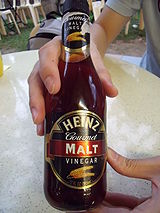
  • Malt
  • Palm
  • Raisin
  • Rice
  • Wine

The first stage in vinegar production is to ferment sugar-containing food into a dilute alcohol (ethanol) containing liquid. This first stage is very much like wine or beer production.

This first stage of malt vinegar production is similar to beer-making in that the barley must first be malted, turning starches into sugars, before fermentation can take place.

The second stage to vinegar production is to sour the based-based liquid with acetic acid bacteria.

Acetic acid bacteria is a range of bacteria types that metabolize alcohol and turn it into acetic acid.

Unlike the fermentation process, in which yeasts convert sugar into alcohol in the absence of oxygen, acetic acid bacteria require oxygen.

Distilled Vinegar

Distilled vinegar takes vinegar, made as described above, and distils it to concentrate the acetic acid and purify the vinegar.

Distilled vinegar is not guaranteed to be yeast-free, but has little (if any) yeast protein in it, depending on how carefully the distillation process has been conducted.

Vinegar and Avoiding Yeast

If you are on a yeast-free diet, it is generally advised that you avoid yeast.

To some extent this depends on the reason for your yeast-free diet. If you have a yeast allergy, any type of vinegar, with the possible exception of distilled vinegar, is likely to be a problem.

Some home remedies for a yeast infection include apple cider vinegar.

(Visited 69,367 times, 1 visits today)

{ 19 comments }

Gluten allergy, wheat allergy and wheat lectin intolerance can easily be confused.

A gluten allergy is the body’s immune response to proteins in gluten. Gluten should be harmless to the body, or so one would think. This is not always the case, as I will explain later in this article.

Some people’s bodies decide that gluten proteins are a foreign invader and this triggers an immune response, leading to an allergic reaction.

An intolerance to wheat lectin is a different matter, and it is far more common than you might think.

Anyone with type O blood can not tolerate wheat lectin.  It causes the blood to clump together, which is a bad start.  Then the immune system attacks the clump, including blood cells and lectin, in an attempt to get rid of it.

This sounds very similar to an allergic response to wheat proteins.  Where there is wheat, there is gluten, so it is possible to confuse the two situations.

If you’re blood is type O, you should avoid wheat as much as possible, although gluten is not necessarily a problem.  It may be, and of course if you are celiac you must avoid gluten anyhow, which includes wheat.

But for those people with type O blood and who are neither celiac nor allergic to gluten, wheat is still a problem.

Wheat is not the only food that type O people must avoid.  And blood types A, B and A/B have their own list of foods to avoid.

With gluten allergies being such a high-profile topic these days, it is worth noting the truly huge number of people world wide that should be avoiding wheat.

(Visited 6,181 times, 1 visits today)

{ 2 comments }

Gluten free bread in a bread maker – its tasty, convenient, and eventually cheaper than buying gluten free bread. It really helps reduce the cost of your gluten free diet.

My home made bread has been very successful so far. The bread is tasty and has a good to great consistency.

Gluten Free Bread | Gluten Free Diet | Gluten Allergy

Here is my challenge:

  • Make bread within 15 minutes (and let the bread maker do the rest.
  • Have consistently great consistency
  • Have it rise properly into a beautifully shaped loaf.

[click to continue…]

(Visited 1,971 times, 1 visits today)

{ 0 comments }

Beer Allergy

by Allergy Guy

Beer allergy is an allergic reaction to one or more ingredients in the beer.
In most cases, this is likely to be:

Yeast (yeast allergy)
Barley
Wheat
Gluten (gluten allergy)
• Sulphates
• Hop (humulus)
• Other additives

Yeast and sulphates are an intrinsic part of beer. Unlike distilled alcohol, beer, like wine, always contains yeast because it is make by fermenting starches with yeast.
If you have a yeast allergy, then beer is strictly off limits for you.
Yeast produces sulphates, so there will always be some level of sulphates in beer, although some manufacturers may add more sulphates as a preservative.
If you are allergic to sulphates, check each brand of beer to see if they add sulphates. You may find that some brands of beer work for you, were as others have too high a level of sulphates.
Some people may be allergic to hop, a type of plant used to flavor beer.
Most beer is made by fermenting either barley or wheat. If you have a gluten allergy, you will not be able to drink most beer.
With the rising profile of gluten intolerance and celiac, it is becoming possible, even easy in some areas, to buy gluten free beer.
Gluten free beer is made with alternative grains and pseudograins such as rice, buckwheat and sorghum. It is still a specialty product so while more available than ever, it still may take some searching to track down.
Some beer is more “pure” than others. Some brands add preservatives and other additives, which you may react to.
In this case, it is a matter of finding which brands agree with you.
If you are allergic to both beer and wine, the most likely reason is yeast. Otherwise, watch out for the other causes listed above.

(Visited 29,950 times, 1 visits today)

{ 0 comments }

Allergies and Depression

by Allergy Guy

Depression is one possible symptom of allergies and food intolerances.

There are many types of depression, ranging from a somewhat negative outlook, through to full-blown major depression.

Because different people can experience an allergy to the same trigger in different ways, it is impossible to say that a specific type of depression characterizes an allergy symptom.

It is probably fair to say that allergies do not cause major depression, but may make it worse (this statement subject to change should new information become available).

Many people have described the depression associated with allergies with the following characteristics:

  • Lethargy
  • Low self-esteem
  • Low motivation
  • Difficulty getting out of bed in the morning
  • Lack of pleasure in life
  • Coupled with insomnia, another typical allergy symptom, allergy-induced depression can look a lot like melancholic depression.

    Allergic symptoms can shift, causing insomnia at night, and exhaustion and lethargy during the day leading sleeping too much during the day and inability to sleep at night.

    This can also make allergy-induced depression look a lot like “atypical depression.”

    Patients seeking help with depression are usually prescribed medication and possibly referred to psychiatric counseling. This does not deal with the root cause of allergy-induced depression.

    Watch out for depression that is mixed with other typical allergy symptoms. Often, certain symptoms can vary in intensity over time according to exposure to the allergen and other health-related factors.

    In this case, suspect allergies, rather than an antidepressant medication deficiency.

    If you suspect allergies, drag yourself to an allergist or doctor who practices environmental medicine.

    You should still seek direct help with your depression because it may help while investigating allergy causes, and it may not be caused by alleriges.

    Investigate, as much as you are able, typical allergy triggers such as food, mold, dust, etc.

    Common allergy-causing foods: wheat, gluten, corn, yeast.

    Mold: do you live in a damp climate? Do you feel worse when humidity is high? Do you have mold growing in the shower, under the sink etc.? Do you have a damp basement or a leaky roof?


    Internal Links

    Gluten allergy sufferers may have an advantage over the rest of the population.

    By following a gluten free diet, those with a gluten allergy or celiac are reGluten Allergy | Gluten Free Diet | Grain Damageducing the intake of grains that may in fact be harmful to the general population.
    According to the book The Gluten Connection the shift in diet when our ancestors switched from hunter-gatherer to farmer did not have a positive effect on our health, even as it boosted the population.

    [click to continue…]

    (Visited 3,742 times, 1 visits today)

    { 0 comments }

    Gluten Free Bread 4

    by Allergy Guy

    I’ve been making gluten free bread for a few weeks now, this is I think the fourth loaf.  It tastes great, and it is really fantastic to have absolutely fresh bread – you can’t beat bread, still hot from the oven (or in this case the bread maker) slathered with butter that melts right into the bread

    The previous bread making exercises were all successful, and my my gluten free diet was well satisfied..  I kept forgetting to take a picture of the finished product, so this time I’ve included one and so I may as well write about the experience.

    [click to continue…]

    (Visited 1,913 times, 1 visits today)

    { 0 comments }

    Cereal

    by Allergy Guy

    Cereal referrers to cultivated members of the grass family used as food, specifically the seeds.

    Cereals are staple foods throughout much of the world.

    Because different types of cereal do better according to the climate and other factors, different cultures use different cereals as staples, for entirely practical reasons.

    In the third world, many people subsist on cereals, especially rice, wheat and maize. In developed countries where incomes are much higher,our consumption of cereals appear to be lower. In fact, cereal consumption is much higher than we realize due to a high consumption of meat. These animals are generally fed cereal, especially corn.

    Cereals generally lack lysine, and essential amino acid. Vegetarians must complement cereals with legumes such as lentils, beans and peanuts to supply this amino acid. Legumes lack methionine, an essential amino acid supplied by cereals. Rice and dal, corn with beans and peanut butter sandwiches are common combinations of legumes and cereals in various cultures.

    Here is a list of common cereals from throughout the world:

    * Note that cereals marked with an asterisk are gluten-containing grains. Avoid if you have a gluten allergy or are celiac. Other cereals contain glutens, but they are significantly different and do not affect people with celiac disease or those allergic to the gluten in wheat, barley, rye and oats. Even the gluten in oats is considered to be different enough from wheat gluten to be safe for celiacs, although this point is debatable.

    Corn

    The meaning of corn varies according to geography.

    In the UK, it means the “chief cereal crop of a district.” In England, this means wheat, in Scotland it means oats.

    In Canada and the USA, corn means maize.

    When reading ingredients, those with a gluten allergy or celiac are safe with corn only if the packaging is intended for the North American market. If not, watch out!

    (Visited 3,851 times, 1 visits today)

    { 0 comments }

    Gluten allergy cases are on the rise, or at least people are more aware of the negative health effects gluten can have.

    Is this a good or bad thing?

    Its a mixture of both. 

    The good news is that those who have been suffering from gluten allergy symptoms for years are finally discovering the cause of the problem, due to an increased awareness of what to look for, and even that something and common as wheat might be a major source of trouble.

    It is also good news because those of us who have been following a gluten free diet for years are now finding it easier and easier to obtain gluten-free food.  Restaurants are more understanding than ever, and many have a dedicated gluten-free menu.

    This makes it much easier to get by in the world.  It used to be easier just to eat at home and never go out.

    Many following a gluten free diet are not allergic to gluten, but instead have celiac.  This is a genetic disposition, triggered by the ingestion of gluten.  Because it is genetic, the per-capita rates of celiac disease are probably about the same as they always were, but more people than ever are getting diagnosed.  Doctors are beginning to realize that almost 1% of the population has celiac, and they look for less severe cases (where one, rather than both chromosomes carry the celiac gene).

    The bad news is that an ever increasing consumption of processed foods may be causing a gluten allergy.  Considered to be rare, a true gluten allergy may be under-diagnosed as doctors, convinced that a gluten allergy is unlikely, look else where for the problem.

    As awareness increases however, more people are experimenting with a gluten free diet, simply cutting gluten-containing foods out of their diet to see if they feel better.  Those who do are finding it easier than ever to eat without consuming gluten.


    Internal Links

    (Visited 3,122 times, 1 visits today)

    { 0 comments }

    Beer

    by Allergy Guy

    Beer is an alcoholic beverage made by fermenting starches. It is the third most popular drink after water and tea.

    What most people think of as beer is malted barley which is fermented with yeast, and flavored with hops.

    Beer is typically between 4% and 6% alcohol, but varieties exist with less than 1% alcohol, others go as high as 20%.

    Beer has been brewed since well before recorded history.

    Pure Beer

    Pure beer, according to German law, uses only barley, hops and water. Called “Reinheitsgebot” This is the oldest food regulation in the world, and is still on the books today.

    Beer Variations

    Beer There are many other perfectly valid varieties of beer. The starch is usually derived from cereal grains, most often malted barley. Wheat, corn (maize) and rice are also widely used.

    For those who have a gluten allergy or celiac disease, most beer is problematic. There is now a growing trend for an alternative market in gluten free beer. Instead of cereal grains, these beers more often use pseudograins such as buckwheat, millet and sorghum, or other starch sources such as cassava, potato and agave.

    Beer And Health

    Like any alcoholic beverage, beer must be taken in moderation.

    Beer consumption has been associates with a reduction of stress, cardiac disease and stroke.

    Over consumption can lead to alcoholism, liver damage and other health problems.

    For those with a yeast allergy, beer, like wine, is off limits.

    Beer is generally nutritious. It is an excellent source of magnesium, selenium, potassium, phosphorus, biotin, and B vitamins.

    A 2005 Japanese study found that low alcohol beer may possess strong anti-cancer properties.


    External Links